
Food Security and Sustainability in the Cayman Islands
The University College of the Cayman Islands (UCCI) has embarked on an ambitious initiative to establish 1,000 greenhouses across the islands, a pivotal step towards significantly enhancing local food security and fostering a more sustainable agricultural landscape. This visionary project seeks to revolutionize the Cayman Islands’ reliance on imported produce by creating a robust, locally sourced, fresh, and sustainable food network. This endeavor’s core belief is that a widespread network of 1,000 greenhouses operating year-round can dramatically reduce the islands’ dependence on external food supplies, strengthening the community’s resilience and self-sufficiency.
Envision a future
The program’s creators envision a future where fresh, nutritious food cultivated within the islands is readily accessible to all residents. This initiative addresses the immediate need for food security and promotes long-term environmental sustainability by reducing the carbon footprint of importing food.
The University College of the Cayman Islands is honored to collaborate with esteemed partners, including Cleveland Julien, as they launch their inaugural pilot farm, a crucial first step in realizing this ambitious vision. So that everyone can be able to feed themselves and have both communities and be self-sufficient with the food that they grow and eat.
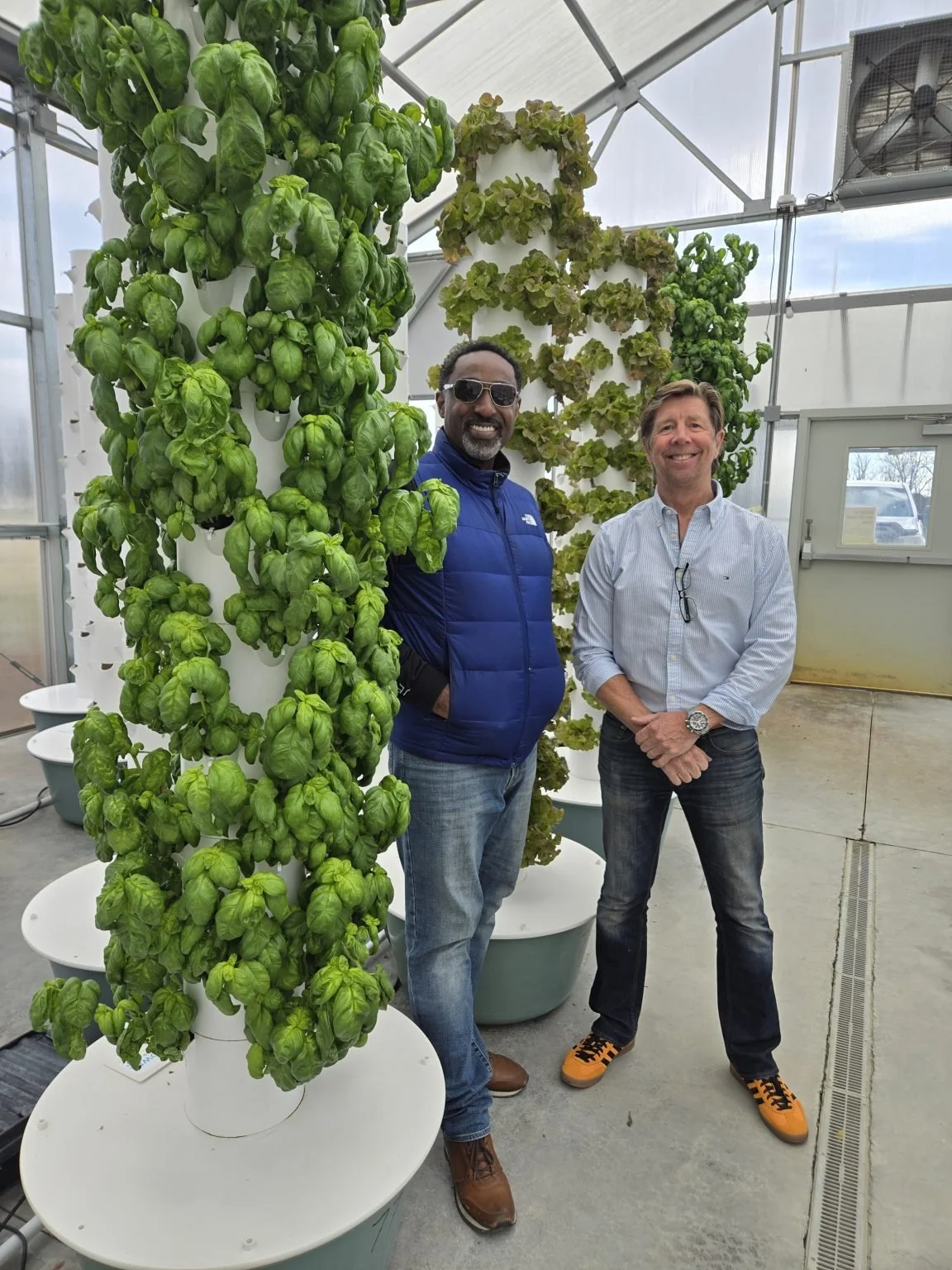
The stark contrast between the traditional farmland available in Grand Cayman and the advanced greenhouse farming techniques employed by partners like Cleveland Julien in North Carolina highlights the transformative potential of this project. The first photo depicts traditional farmland, which underscores the challenges of conventional agriculture in the region. In contrast, the second photo, showcasing Cleveland Julien visiting a sophisticated greenhouse farm in North Carolina, illustrates the possibilities of modern, efficient farming practices.
A key component of this initiative is implementing vertical farming techniques using Tower Gardens. This innovative approach offers numerous advantages, including significant water conservation, minimized land usage, and consistent yearly crop production. By leveraging vertical farming, the project aims to overcome the limitations of traditional agriculture and maximize the yield from available resources. This fascinating new project, centered on Greenhouse Towers, represents a significant leap forward in agricultural technology for the Cayman Islands, promising a more secure and sustainable food future.
